Municipal solid waste (MSWI) bottom ash
Municipal solid waste incineration (MSWI) bottom ash
Waste incineration bottom ash is the material that is left on the grate after the incineration of municipal solid waste. It resembles natural sand and gravel. Around 20–30% of incinerated waste is converted into bottom ash, which consists of glass, metals, ceramics, stone, brick, concrete, ash, and melting products, among other things. It is important to efficiently treat and utilize bottom ash in order to prevent it from ending up in landfill. This also allows the valuable raw materials contained within the bottom ash to be recovered.
For a long time, bottom ash was simply treated to remove metals and then used in landfill site structures, even though there are more valuable opportunities for utilizing bottom ash. Bottom ash minerals, i.e. ourScanwas-manufactured aggregate can be used to replace natural sand and gravel in road construction and concrete products. Metals can also be more efficiently separated and recovered as raw materials for the metal industry.
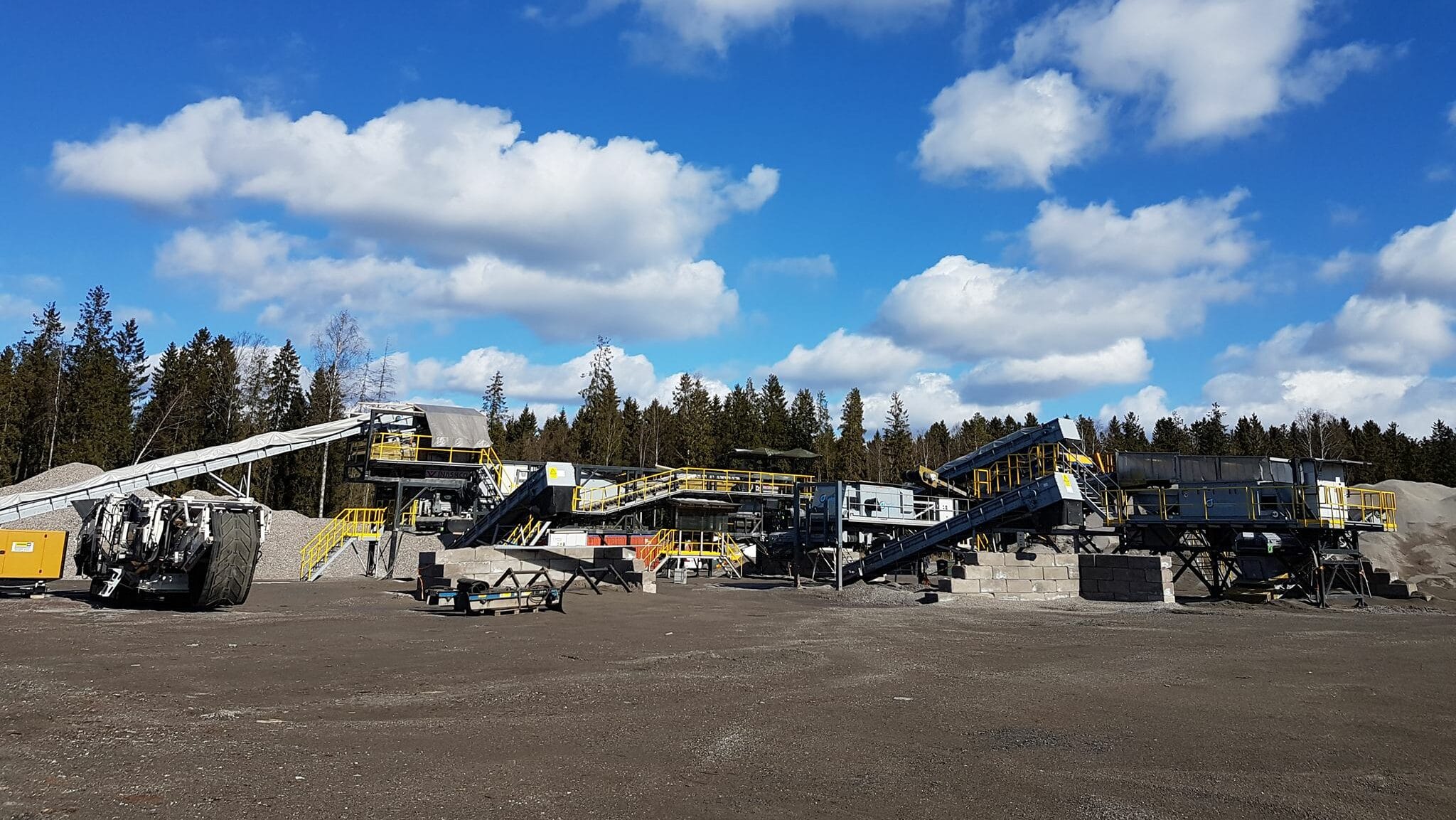
Our ADR (Advanced Dry Recovery) separation system treats approximately 150,000 tonnes of bottom ash each year. Since 2013, we’ve treated significant quantities of bottom ash at our customers’ locations, including in Ilmajoki, Espoo, Tampere, and Porvoo in Finland, in Boden in Northern Sweden, and in Kaunas in Lithuania. Overall efficiency increases if it is possible to move equipment to an area where large quantities of bottom ash are treated instead of transporting the bottom ash.
The first ADR dry separation plant in the Nordic countries
We treat municipal solid waste incineration (MSWI) bottom ash using ADR (Advanced Dry Recovery) separation technology. This method was developed and patented at the Delft University of Technology (TU Delft) in the Netherlands and launched on the market by the Dutch company QR Metals B.V.
Compared to conventional dry separation technologies, the advantage of the technology, which was developed in 2008, is a higher yield of valuable metals. The method does not require bottom ash aging; only the largest pieces of metal are screened. Additionally, no wastewater is generated, and no fluids are used in the treatment process at all.
Manufactured aggregate for sustainable infrastructure construction
Around 85% of bottom ash is mineral material that has a similar grain size distribution and technical properties to natural sand and gravel. The ADR separation technology separates metals with such high efficiency that the minerals, i.e. our Scanwas manufactured aggregate, can be used in place of natural raw materials in road construction and concrete products. This means that it is possible to avoid conventional final disposal or construction at landfill sites.
Read more about Scanwas manufactured aggregate
Contact us for more information!

Antti Rusko
Liiketoimintapäällikkö
Jätteenpolton pohjakuonat, Scanwas-keinokiviaines